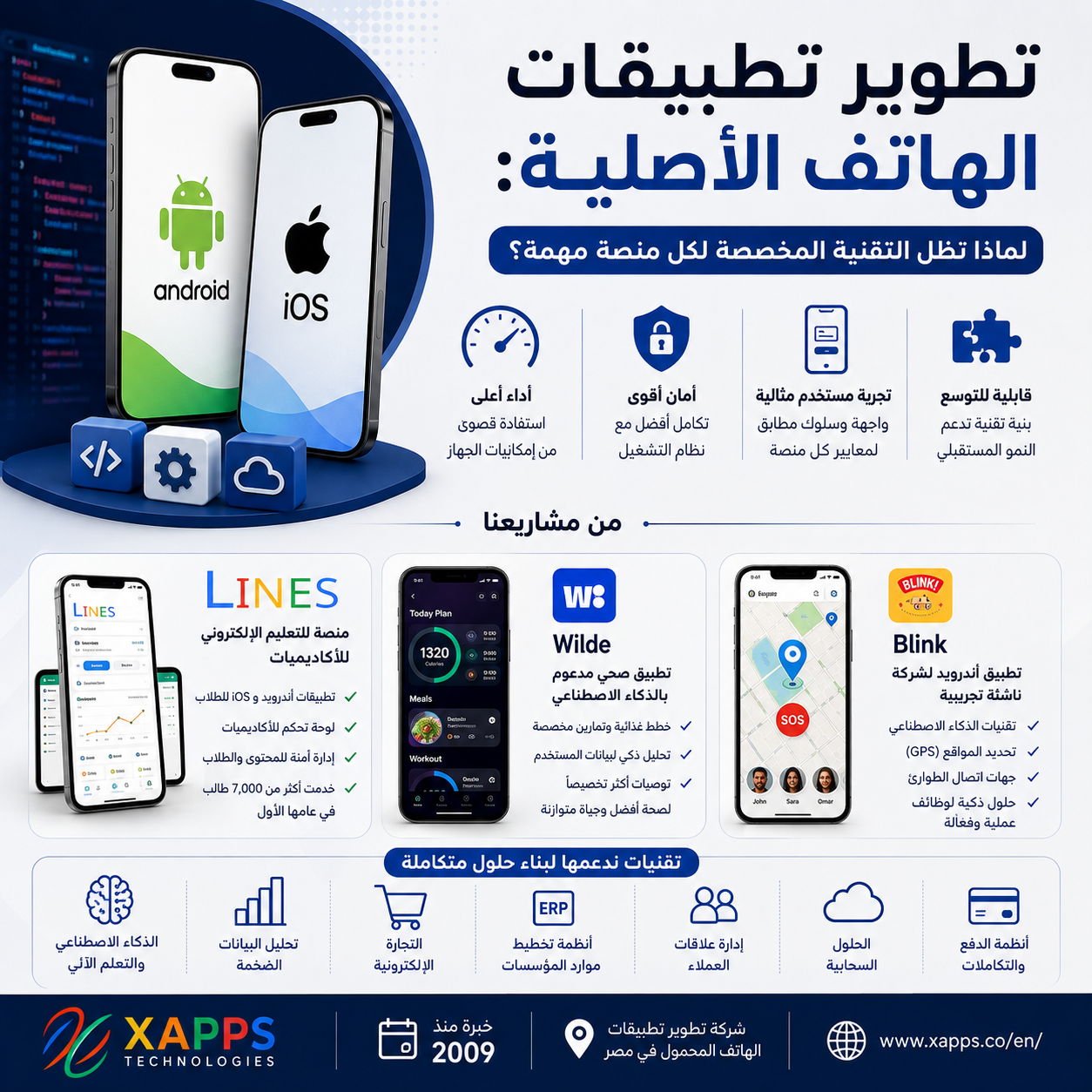

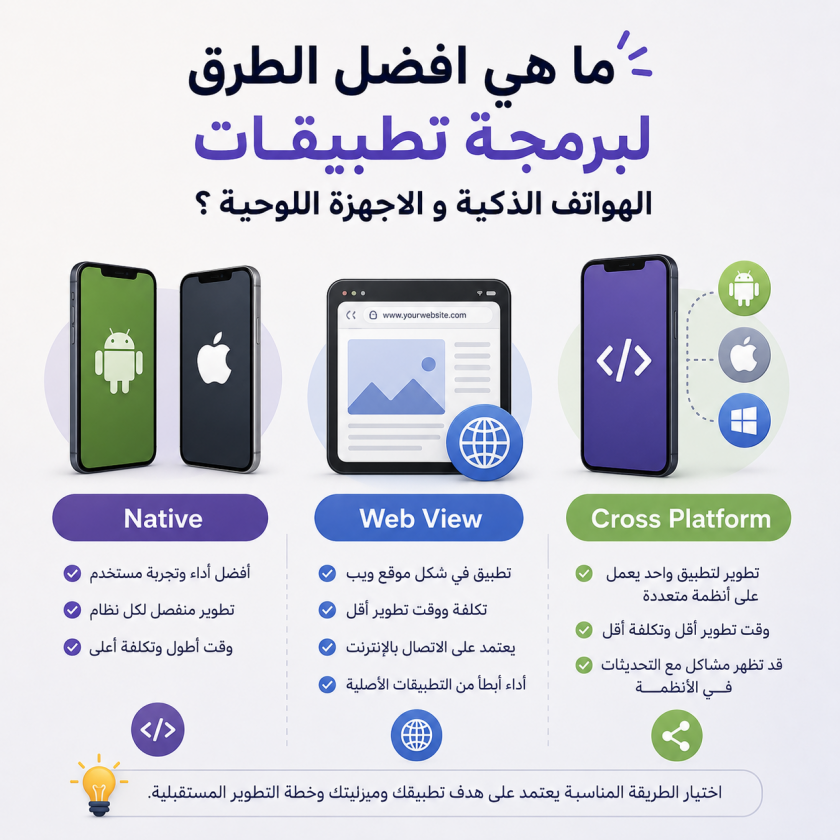
This is known as Native Development.
For example, an Android application is developed separately using technologies compatible with Android. The same applies to iPhone applications, Windows Phone applications, and other platforms. There is no problem with keeping the applications consistent in terms of their overall design and having them all use information from the same database.
Design Your App Now:
View our portfolio and contact us to develop your Android (Galaxy) or iPhone (Apple) application
Native development is generally the better approach, but it requires more development time because the application or idea may need to be developed multiple times, with each operating system using a different programming language and technology stack. As a result, the cost is usually higher.
A well-known example that illustrates the difference is having separate versions of an application for different platforms, such as:
Facebook for Android – Facebook for iPhone
There are other approaches that require less development time and cost, although they also have their own disadvantages. Two of the most common approaches are:
This is not a native mobile application. Instead, a regular website is developed and optimized for smartphone screen sizes using Responsive Web Design. Users access it through a web browser.
As a result, the development cost is generally lower because it requires less development time. However, the experience can be slower because it depends on communication between the browser and the server when sending requests and receiving responses.
Read also:
Why Starting Small Leads to Better App Development
Cross-Platform Development can significantly reduce development time because a single application is developed and then adapted or built for multiple operating systems, such as Android, iPhone, Windows Phone, and BlackBerry.
However, one of the major challenges of this approach is that when an operating system is updated, applications built using cross-platform technologies may experience compatibility issues or require modifications and updates to continue working properly.
Ultimately, designing applications for smartphones and tablets requires investing in the most efficient development approach—one that helps minimize future problems and gives your application an advantage in a competitive market.
Finally, if you found this article useful and learned something new, share it with your friends.
Read also:
Step-by-Step Guide to Designing and Developing Your First Android and iPhone Application