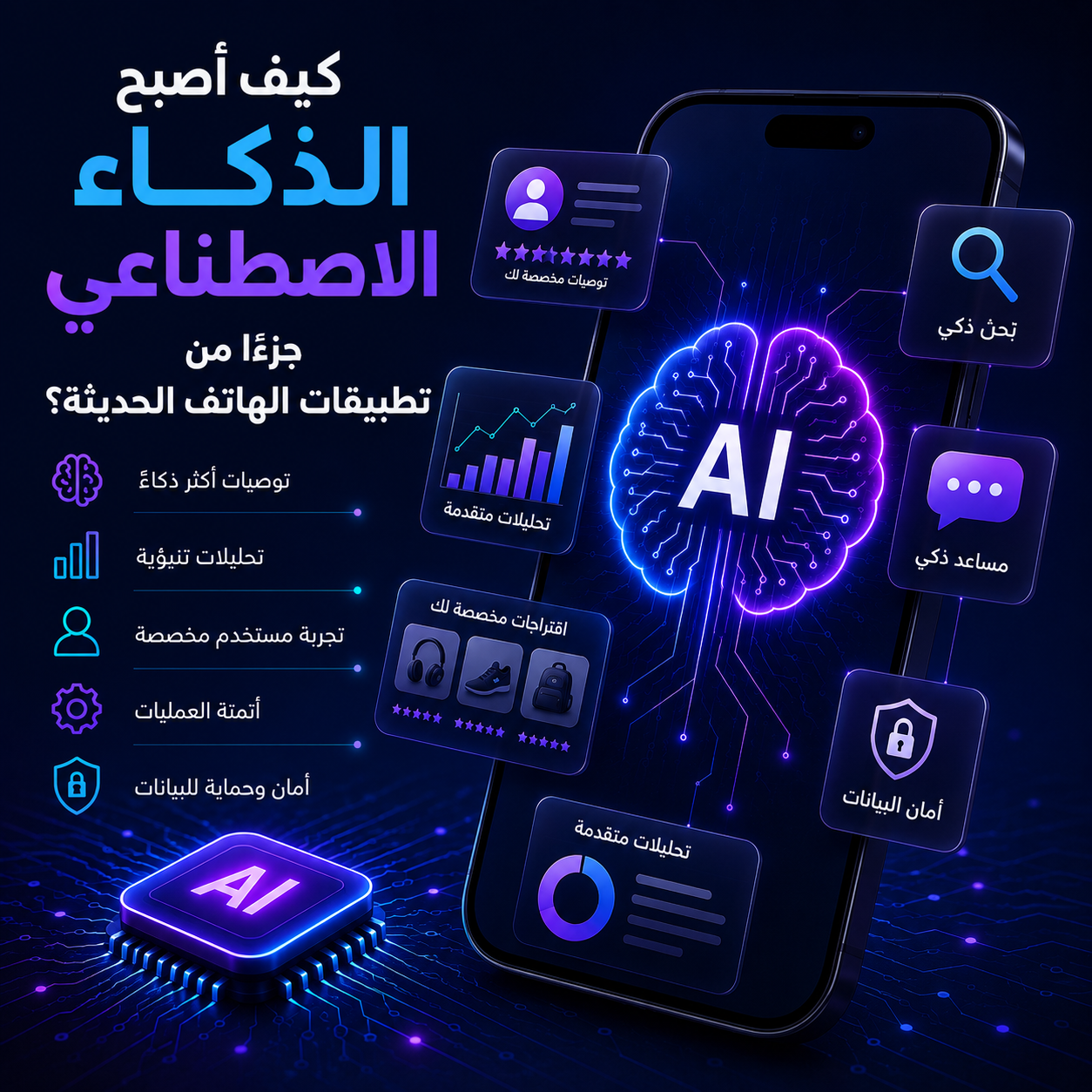

AI is no longer something that only exists in large technology companies or research labs. It is already finding its way into everyday mobile applications, and the interesting part is that users often do not even notice when AI is working in the background.
For a mobile app development team, though, adding AI is not as simple as connecting an AI model and calling the job finished. There has to be a real reason for using it. Maybe the application needs to understand user behavior, make recommendations, recognize patterns, or automate a process that would otherwise require a lot of manual work.
One of the useful things about Machine Learning in Mobile Applications is that it can help an application make decisions based on data instead of relying entirely on predefined rules.
Recommendations are a good example. If an application understands patterns in user activity, it can potentially provide more relevant results or suggestions over time.
Machine learning can also be useful for predictive features, intelligent search, personalization, and automation. But the technology only makes sense when it solves a problem that matters to the user.
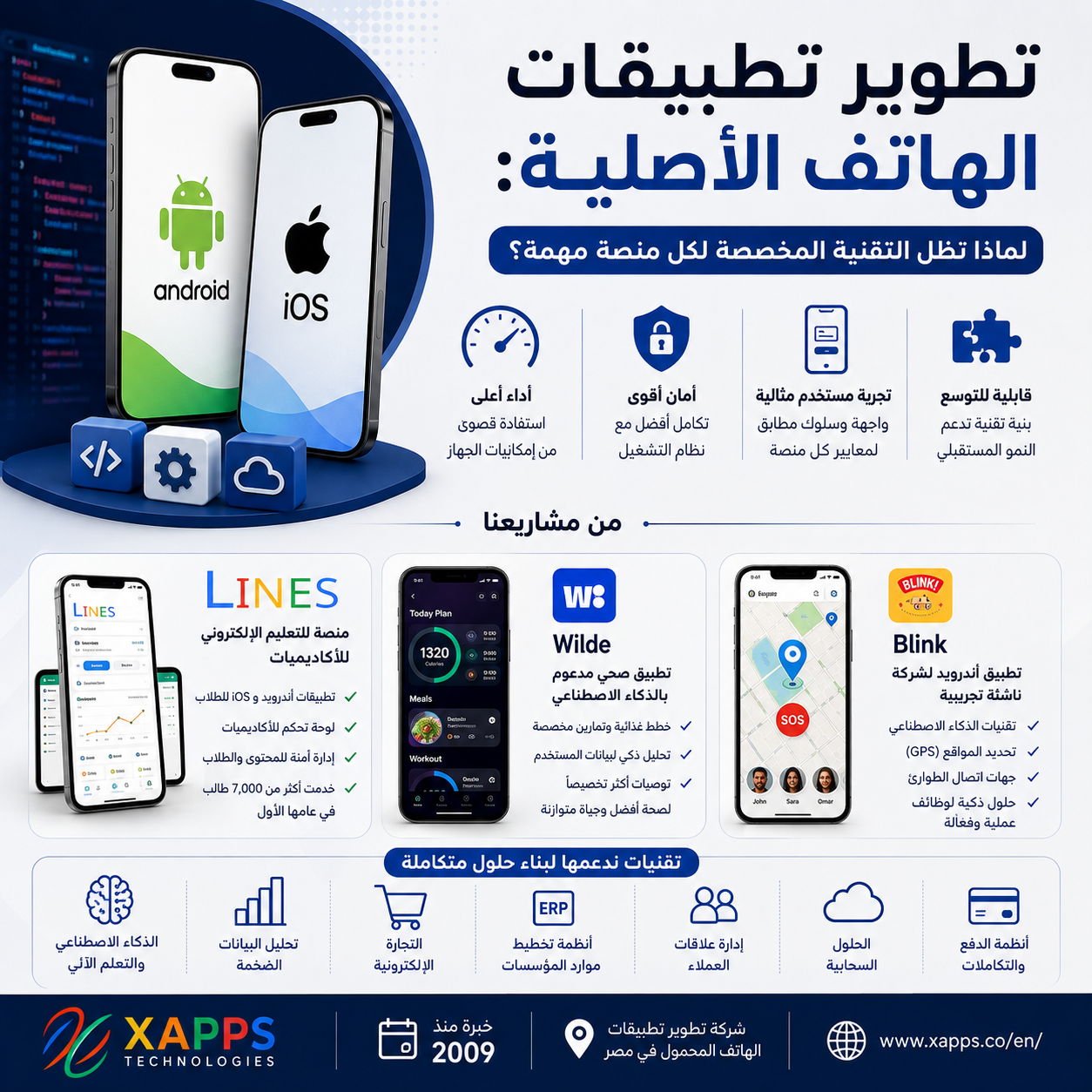
XApps has been working in digital transformation and mobile application development since 2009. Over the years, the company has provided digital solutions and services to government entities, ministries, businesses, and entrepreneurs.
Its clients and projects include the Egyptian Ministry of Justice, Dar Al-Ifta Al-Misriyyah, Elsewedy, Arab Contractors, Zanussi, Kia Motors, Renault Egypt, El Abd, the United Nations Development Programme (UNDP), Magrabi, Faragalla, and Resala Charity Association.
XApps has delivered more than 200 projects across different industries and business sectors, with experience covering mobile applications, digital transformation, artificial intelligence, machine learning, big data analysis, and other technologies.
XApps Website:
https://www.xapps.co/en/
One example is Blink, an Android application developed for an experimental startup company. The application uses Artificial Intelligence technologies alongside features such as GPS and emergency contacts, showing how intelligent technologies can be integrated into a practical mobile application.
Blink Project – Experimental Startup:
https://www.xapps.co/en/project/machine-learning-android-ios-mobile-application-development-mcommerce-programming-blink/
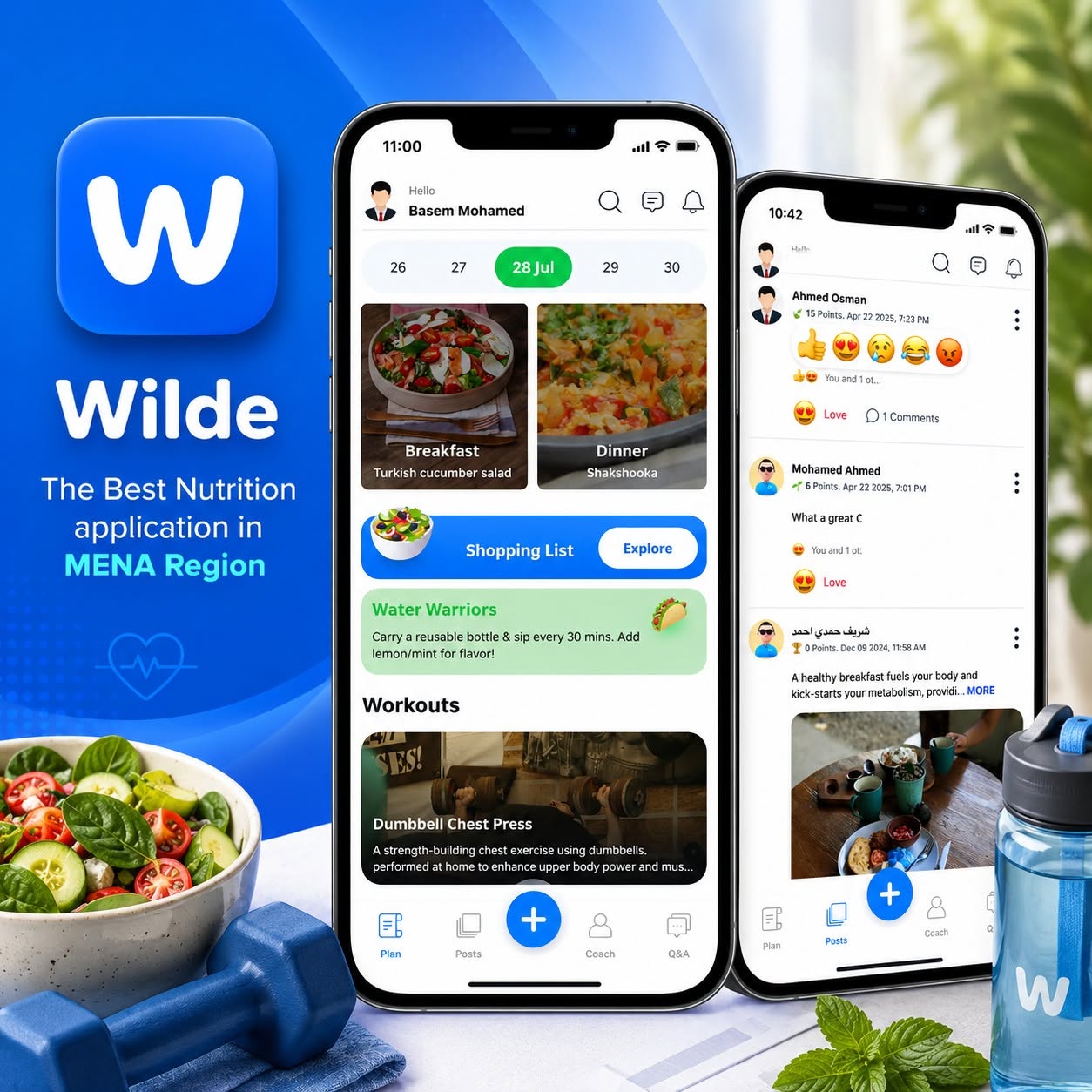
Another example is Wilde, an application that uses artificial intelligence to analyze user data and provide personalized recommendations.
Wilde:
https://www.xapps.co/en/wilde-launches-ai-for-a-healthier-future/
These projects are useful examples because they show a practical side of AI Mobile App Development. The goal is not to put “AI” on an application’s feature list. The technology needs to have a purpose within the product.
A lot of the work behind an AI-powered mobile application happens outside the screen that the user interacts with.
Developers have to think about where the data comes from, how it is processed, how the mobile application communicates with backend services, and how the system behaves as the number of users grows.
There is also the question of security. If an application processes personal or sensitive information, the architecture needs to take data protection seriously from the beginning rather than treating it as something to deal with later.
This is where Mobile Application Development and AI development start to overlap. A good AI feature still needs a reliable mobile application, a suitable backend architecture, proper integrations, and a user experience that does not get in the way.
Not necessarily.
Sometimes a simple rule-based solution is faster, cheaper, and easier to maintain than a machine-learning system. The decision should depend on the problem, the available data, the expected results, and the long-term requirements of the application.
For businesses looking for an AI Mobile App Development Company or a Mobile App Development Company in Egypt, it is worth looking beyond the technology names and asking a more practical question: has the development team actually used these technologies in real applications?
XApps’ published projects provide examples of its work across mobile development, AI, machine learning, healthcare, financial services, government, and other industries.
XApps Projects Portfolio:
https://www.xapps.co/en/project/
AI and Machine Learning can make mobile applications more useful when they are applied to the right problems. The strongest applications are not necessarily the ones with the most AI features; they are the ones where the technology quietly solves a real problem for the user.
That is ultimately what AI Mobile App Development should be about: using technology because it adds value, not simply because it is trending.