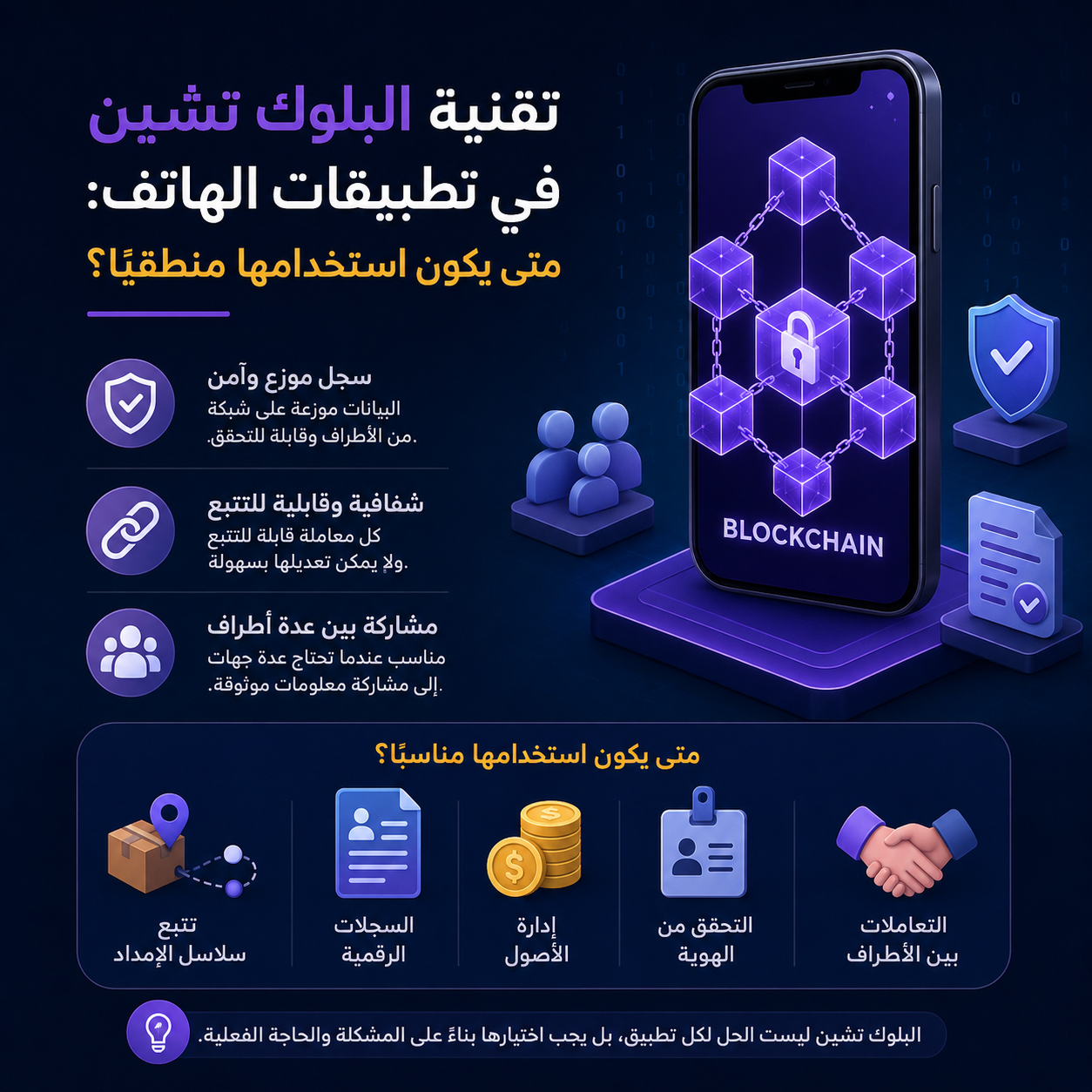

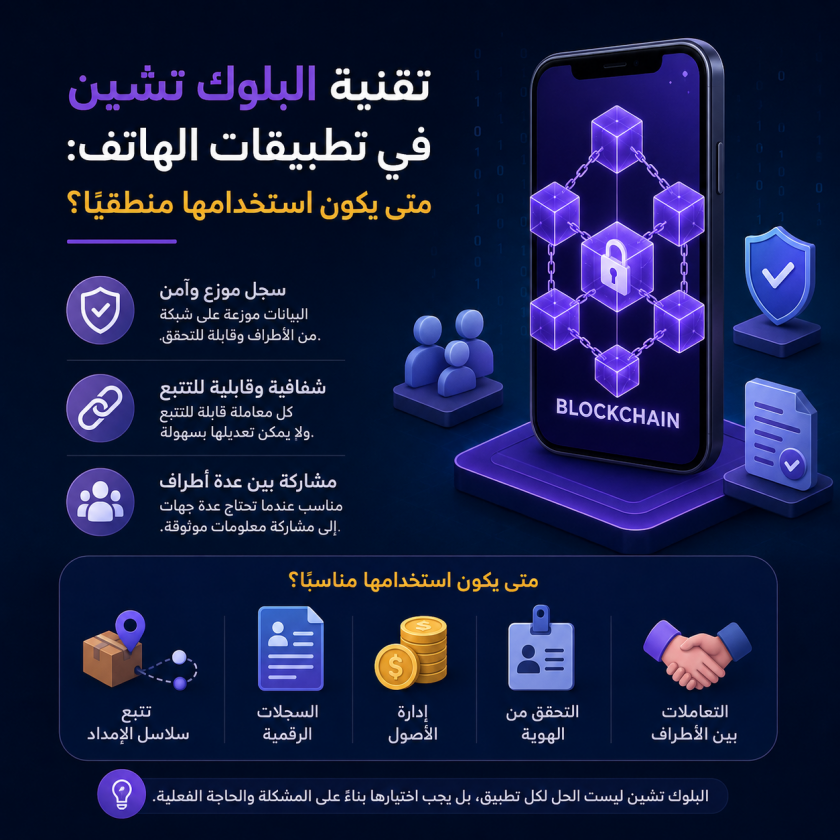
Blockchain is often associated with cryptocurrencies, but the technology itself has a wider technical concept: creating a distributed record of transactions or information that can be verified across a network.
For mobile application development, the interesting question is not whether blockchain is a modern technology. The better question is whether a decentralized architecture can solve a real problem better than a conventional database.
A traditional application usually depends on centralized systems. Data is stored and managed by a specific backend infrastructure, while mobile applications communicate with that infrastructure through APIs.
A blockchain-based architecture can introduce a different model in which transactions or records are distributed across a network and validated according to defined rules.
This can be useful in scenarios where data integrity, traceability, and shared verification are important.
However, blockchain is not automatically the best solution for every mobile application. If an application simply needs to store ordinary user information, a conventional database may be simpler, faster, and more practical.
When blockchain is introduced into a mobile application, the architecture becomes more than a mobile interface.
The application may communicate with backend services, which in turn interact with blockchain networks or smart contracts. Authentication, transaction management, data storage, and user permissions must all be considered when designing the system.
Another important consideration is performance. Not every piece of application data needs to be stored on a blockchain. In many architectures, only specific records or transactions require decentralized verification, while other information remains in conventional databases.
This makes architectural planning particularly important in blockchain mobile app development.
Blockchain can be considered when several parties need to share information while maintaining a verifiable record of transactions or changes.
Potential applications can include supply-chain tracking, digital records, asset management, identity-related systems, and other scenarios where traceability is a core requirement.
The technology should therefore be selected because of the problem it solves, not simply because blockchain is available.
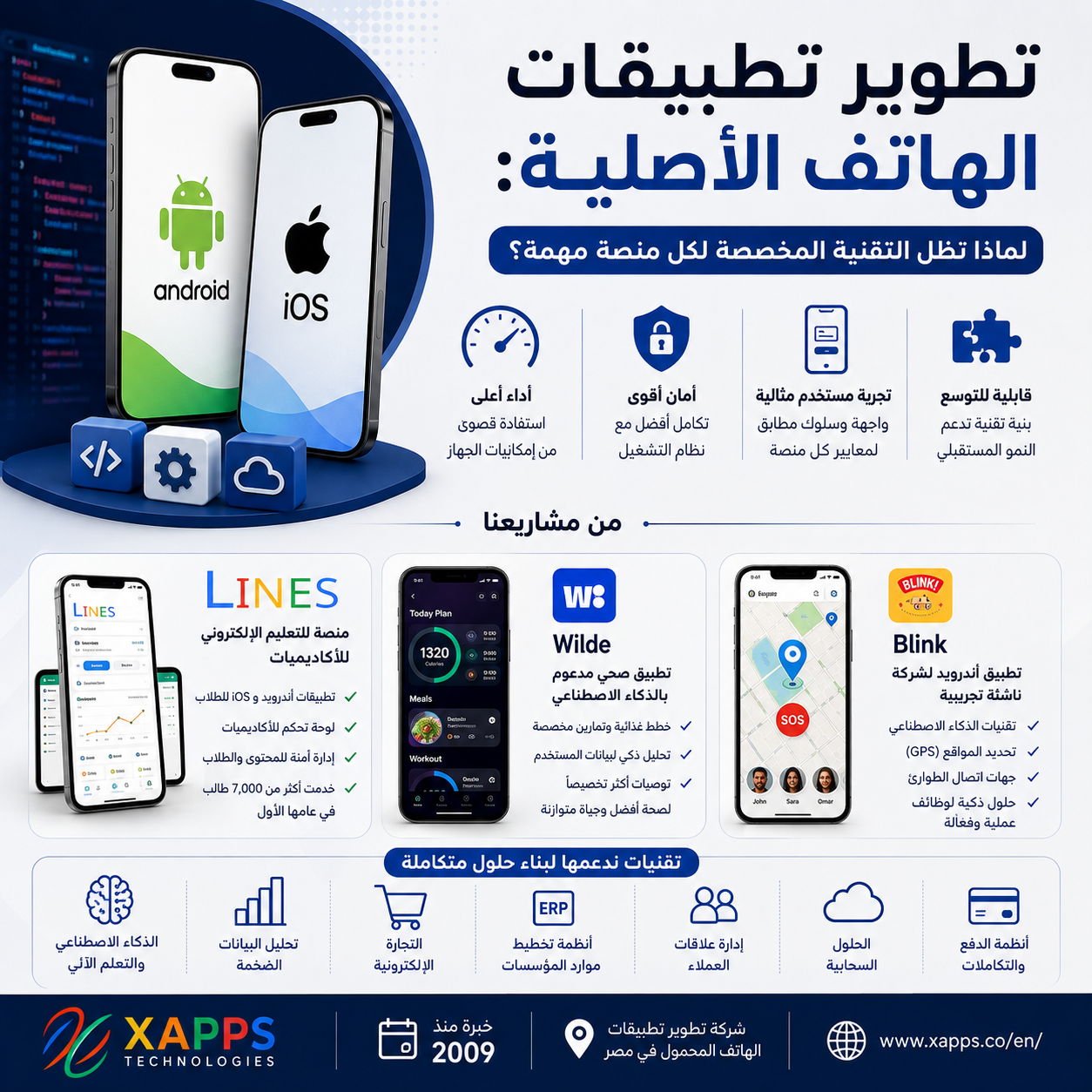
XApps lists Blockchain among its technology and development capabilities alongside mobile application development, artificial intelligence, Big Data, Internet of Things, cloud technologies, augmented reality, robotics, and other modern technologies.
XApps Website:
https://www.xapps.co/en/
XApps has been working in mobile application development and digital transformation since 2009. The company states that it has developed more than 200 Android applications.
Its published work includes applications and systems for organizations such as Visa Egypt, the Egyptian Ministry of Justice, Dar Al-Fouad, Elsewedy, Arab Contractors, Electrolux, and other organizations across different industries.
This experience is relevant when evaluating emerging technologies because successful software development is not only about adopting new tools. It is also about choosing the right architecture for the requirements of each project.
Blockchain can provide useful capabilities, but it also introduces architectural complexity.
A development team should first understand the business process, data requirements, users, security considerations, and expected scale. Only then can it determine whether blockchain adds real value.
This principle applies to blockchain as well as artificial intelligence, IoT, Big Data, and cloud technologies.
Blockchain application development can create new possibilities for mobile systems when decentralization, traceability, and shared verification are genuine requirements.
But blockchain should not be treated as a replacement for every traditional database or backend architecture.
For organizations exploring blockchain in mobile applications, the strongest approach is to begin with the problem, evaluate the technical requirements, and then determine whether decentralized technology provides a meaningful advantage